

Social contexts and research
An academic exploration of how structural, sociological, and policy frameworks shape the lived experiences and learning trajectories of Australian children and families.
Social and Geographical Isolation
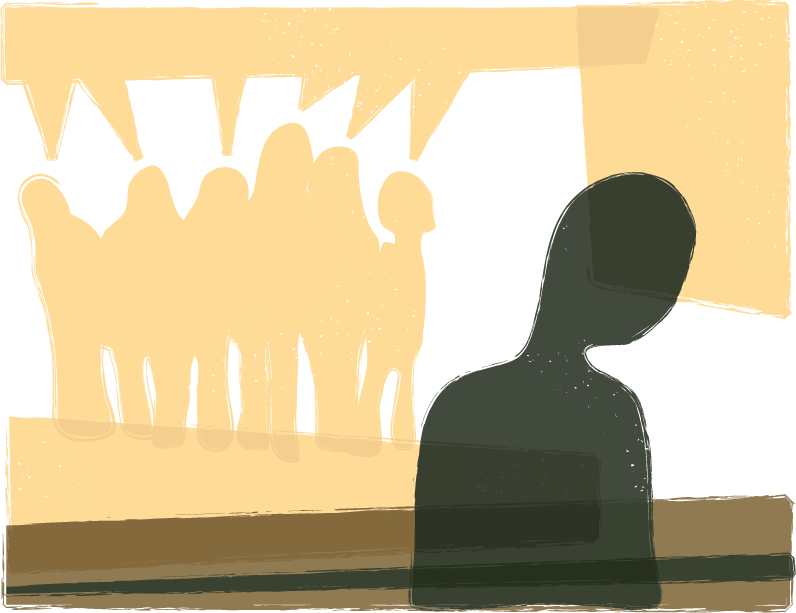
Children living in remote and very remote Australia have fewer early childhood services, fewer play opportunities and less access to health and community supports. The 2024 Australian Early Development Census (AEDC) shows this clearly: 54% of children in major cities were developmentally on track across all five domains, compared with 51% in regional areas and 43% in remote and very remote areas. Nationally, 23.5% of children were developmentally vulnerable on at least one domain. These are population patterns, not diagnoses of individual children, but they signal where service provision needs strengthening. Bronfenbrenner’s ecological systems theory explains the difference: a child’s microsystem of home, service and playgroup sits inside a mesosystem of connections, and both are shaped by the exosystem and macrosystem of policy, funding and community infrastructure. Where those outer systems are thin, the child’s everyday experiences narrow, and the child has fewer opportunities to build language, social skills and a sense of belonging. Implications for service provision follow directly: services in these areas need flexible opening hours, transport and outreach options, and strong links with Aboriginal community-controlled services where they exist. Educators can also build social capital within the service itself, through supported playgroups, family events and peer networks that give isolated families a reason to connect.Children living in remote and very remote Australia have fewer early childhood services, fewer play opportunities and less access to health and community supports. The 2024 Australian Early Development Census (AEDC) shows this clearly: 54% of children in major cities were developmentally on track across all five domains, compared with 51% in regional areas and 43% in remote and very remote areas. Nationally, 23.5% of children were developmentally vulnerable on at least one domain. These are population patterns, not diagnoses of individual children, but they signal where service provision needs strengthening. Bronfenbrenner’s ecological systems theory explains the difference: a child’s microsystem of home, service and playgroup sits inside a mesosystem of connections, and both are shaped by the exosystem and macrosystem of policy, funding and community infrastructure. Where those outer systems are thin, the child’s everyday experiences narrow, and the child has fewer opportunities to build language, social skills and a sense of belonging. Implications for service provision follow directly: services in these areas need flexible opening hours, transport and outreach options, and strong links with Aboriginal community-controlled services where they exist. Educators can also build social capital within the service itself, through supported playgroups, family events and peer networks that give isolated families a reason to connect.
Divorce and Changing Family Structures
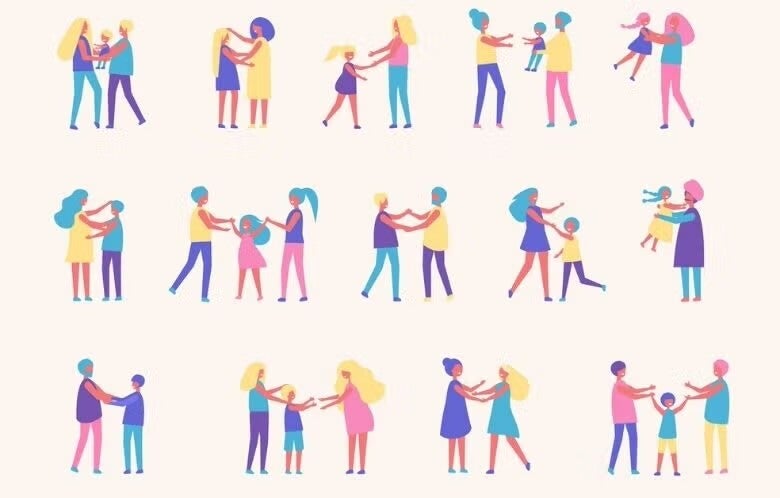
Around 50,000 children in Australia experience parental separation or divorce each year, although this figure is not limited to under-fives. Separation can disrupt routines, reduce household income and shift children between homes. Australian families are also increasingly diverse: single-parent households, same-sex parent families, kinship care and multi-generational households are all part of contemporary Australian society. Bronfenbrenner’s theory reminds us that change in one system ripples outward, and that the quality of relationships between systems matters more than the structure itself. Social capital theory adds that families draw on bridging and bonding networks for practical help, information and emotional support. When separation weakens those networks, children may show withdrawal, anxiety, aggression or regression in sleep and toileting. Educators can support by maintaining predictable routines, offering consistent relationships and documenting changes sensitively without labelling the child. Impacts on development and learning are often subtle: children may show reduced concentration, difficulty with transitions, or a need for reassurance about who will collect them. Family diversity means educators should avoid assumptions about who a child’s family is, and instead ask open questions and use inclusive language. Wellbeing and relationships are supported when the service reflects the family’s own structure in its documentation, photos and story times.
Out of Home Care
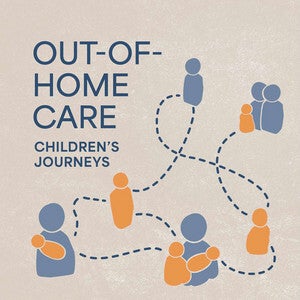
The Australian Institute of Health and Welfare (AIHW) reported 7.5 children per 1,000 aged 0–17 in out-of-home care at 30 June 2025, with the initial release excluding most Queensland data. Children in care often move between placements, which can interrupt friendships, education and attachment. Attachment theory and trauma-informed practice both emphasise that continuity of caring relationships is the key protective factor. In the EYLF V2.0, Principles 2 and 3 call for educators to build secure, responsive relationships and to recognise each child’s unique strengths and needs. Practice should centre belonging, identity and cultural continuity, including for Aboriginal and Torres Strait Islander children, where Aboriginal community-controlled services and kinship arrangements are often the most sustaining supports. Impacts on children’s development, learning and wellbeing include difficulty forming secure attachments, reluctance to settle into routines, and a heightened awareness of change. Service provision must therefore prioritise continuity: a consistent educator, stable peer group and predictable daily structure. Australian policy responds through the Early Years Strategy 2024–2034 and Safe and Supported: National Framework for Protecting Australia’s Children 2021–2031, both of which emphasise prevention, early intervention and coordinated family support, with state programmes such as NSW’s First 2000 Days and Brighter Beginnings and Queensland’s Positive Transitions toolkit supporting the earliest years and transitions between care settings.
Create Your Own Website With Webador